
Planning to travel from Estonia to St. Petersburg by land? Be prepared for a much slower border crossing. Since September 30, Estonia has been carrying out full customs inspections on everyone entering the country from Russia. The new checks have caused significant delays at the border, including at the Narva–Ivangorod crossing.
Travelers heading in the opposite direction, from Estonia to Russia, have already been subject to full customs control since August 2024. But the latest changes have made the entire border crossing considerably more difficult and time-consuming.
What Changed at the Estonia–Russia Border
On September 30, Estonia introduced 100% customs inspections for people entering the country from Russia. The green channel is no longer available
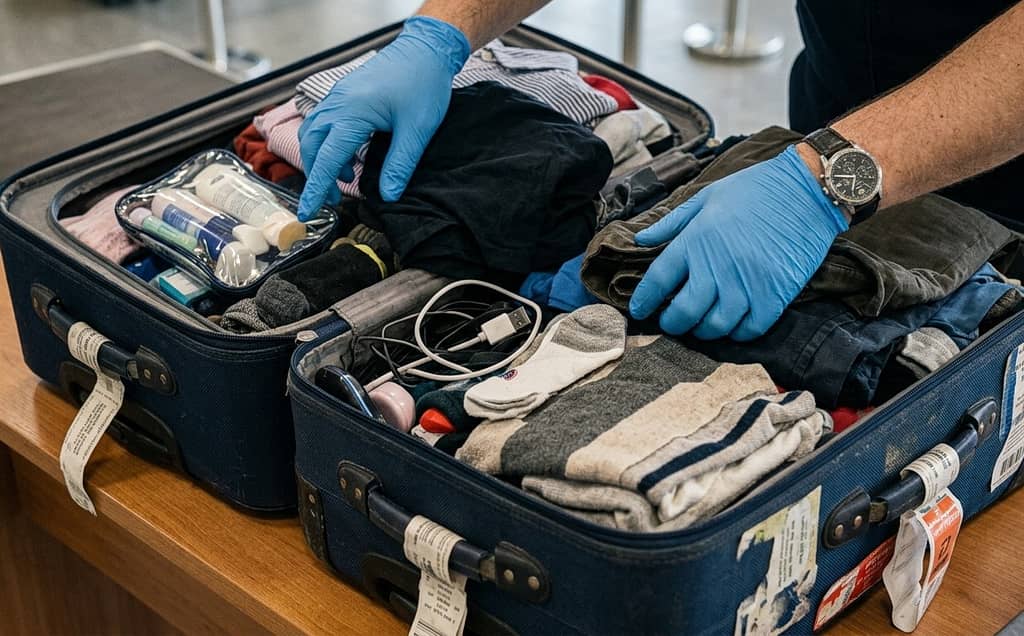
Customs officers may scan luggage and open bags for a manual inspection. The new procedure has significantly slowed the movement of passengers across the border. Estonian authorities have also reduced the operating hours of the border crossings: Narva, Luhamaa and Koidula are currently open from 7 a.m. to 7 p.m.
Long Delays at Narva–Ivangorod
The effect is particularly noticeable at Narva–Ivangorod, the most relevant land crossing for travelers heading between Estonia and St. Petersburg. The crossing is currently open to pedestrians only; cars must use other border checkpoints.
According to Russia’s Northwestern Customs Administration, 2,480 people crossed from Ivangorod into Estonia between September 23 and 25. From September 30 to October 2, the figure fell to 1,401. In the opposite direction, 2,615 people crossed into Russia during the first period, compared with 2,002 after the new checks were introduced.
Russian customs officials have reported periodic interruptions in pedestrian traffic when the Estonian side cannot process travelers quickly enough. Queues have formed on both sides of the border, and some travelers have reported spending several hours waiting to cross.
Because the crossing closes at 7 p.m., anyone who does not make it through in time may have to wait until the following day.
Even Ordinary Items Can Be Confiscated
Travelers heading from Estonia to Russia should also pay close attention to what they carry. Full customs control in this direction has been in place since August 2024. Every person and their luggage are checked when crossing on foot, while vehicles and the goods they carry are also inspected.
Recent cases show that the restrictions can affect items that might seem completely ordinary. Between September 7 and 8, Estonian customs officials found goods they did not allow to be taken to Russia in the luggage of three travelers: a Casio calculator belonging to a 32-year-old Libyan citizen, an electric drill with cutting discs and wood attachments carried by a 68-year-old Russian woman, and a Xiaomi pressure washer belonging to a 67-year-old Swiss citizen.
The items were transferred to the ownership of the Estonian state. The Swiss citizen also received a warning.
Similar cases have been reported previously. In August, Estonian customs prohibited a Finnish citizen from taking an aluminum frying pan to Russia. In March, a Russian traveler had children’s hockey skates worth €499 confiscated. In December of the previous year, a Finnish citizen was turned back because of a pair of sneakers worth about €1,000.
In these cases, the items were classified as luxury goods or goods prohibited from being exported to Russia. The examples are a reminder that even ordinary household items can become a problem at the border.
What Travelers to St. Petersburg Should Know
If you are traveling to St. Petersburg via Narva and Ivangorod, allow plenty of extra time for the border crossing. The combination of full customs inspections and the reduced operating hours means that delays can be difficult to predict.
Keep your luggage organized so that it can be opened and inspected easily, and check the current rules before your trip. Most importantly, avoid scheduling anything in St. Petersburg immediately after your expected arrival. A border crossing that might once have taken relatively little time can now take several hours.